|
|
 |
|
Below you will find some of the applications and projects that
uses RTCU units. This list is far from complete, but should give
you an overview of the many possibilities.
If you need more
information on one of the applications, please let
us know, and we can provide you with more information.
RTCU
Application Examples |
|

|

|
 |
|
|
 |

|
 |
 |
 |

When the owner leaves the car, it arms itself,
and if the vehicle is moved from it's parking position without
being disarmed, it will report an alarm condition to the
owner and to a central facility |
 |
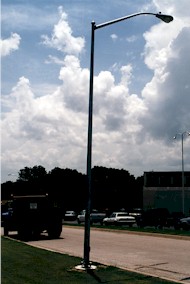
The RTCU A6 unit and RTCU A9 are currently being
integrated in city wide systems for remote controlling of
street lightning. The RTCU unit controls a group of street
lights and on the command received from the central control
room either as an SMS message or via. GPRS the light can be
turned on/off. If for some reason communication from the
control room is lacking the unit enters a standalone operation
mode where an inbuilt calendar controls the light. The unit
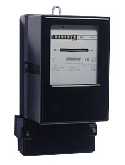
also monitors the power consumption using an S0 meter
interface.. |
 |
 |
 |

|
 |
 |
 |

The RTCU-M7 unit is used for monitoring remote locations, such
as cottages where there typically is no power available. The
systems utilizes the RTCU-M7 units ability to power itself
down for a number of seconds, thereby saving considerable
power, and allowing the unit and attached sensors to be
powered from a solar panel. The units includes a built-in Gel
accumulator that are charged by the solar panel during
daytime. |
 |

If deep freezers in supermarkets are out of function during the
night/weekend, it can have catastrophic effect ! The RTCU-DIN
units are used for monitoring multiple freezers, and sending
alarms to the right person using SMS and Voice messages. This
allows the operator to act fast, and minimize the damage |
 |
|
 |

|
|

|

We was asked by one of our customers if it was possible to
take the RTCU-M7 unit, put enough batteries in the unit so it
could work for 10 months, and at the same time make it small
enough so it could be placed on the head of a seal ! Oh, it
also needs to survive 200 meter water depth. Our customer was
in the process of building a large offshore windmill park and
they wanted to research the effect on the seals living in the
area.
We developed a custom designed RTCU unit, total time elapsed from idea to working unit was only 3 weeks ! The unit
is a good example of how flexible the RTCU concept are.
Essentially it is just a "standard" RTCU unit, that
has been changed physically to accommodate the size restrains.
The developed program for this application, is a
traditional RTCU program, which also runs on all our other
units, and was easily simulated in the RTCU-IDE development
environment. When the hardware was finished, it was just a
matter of downloading the application to the "real"
unit.
The unit is completely
self-contained, with it's own high-capacity battery pack, it
is able to operate for up to 10 months, logging its position
via GPS each hour, and sending weekly reports via SMS. These
reports contains all the logged positions as well as battery
status etc. The unit has a sensor onboard, that allows it to
detect if it is not in saltwater so that the GPS
receiver can be switched on to obtain the seals position. The RTCU unit is encapsulated in
a pressure resistant material, allowing the unit to go as deep
as 200 meters below the surface !
Should you have any applications where the standard RTCU units
isn't perfect, please don't hesitate to contact us, for a
discussion of your needs !
|
|
|